
Is Jesus black or white?
Jesus is not black or white, he is historically a Middle Eastern Jewish man from first-century Judea, with olive toned skin typical of the region. Racial depictions are cultural projections that serve social or political agendas. This view aligns with evidence from archaeology and texts, emphasizing spiritual essence over physical traits.
Key Takeaways
- Cognitive bias in imagery: Modern psychology shows how availability heuristic leads us to visualize Jesus based on dominant cultural media, distorting historical accuracy.
- Identity detachment benefits: Releasing racial labels fosters psychological flexibility, reducing intergroup conflicts rooted in projected identities.
- Transcendence via mindfulness: Integrating ancient Stoic principles with CBT techniques reframes spiritual figures as universal archetypes, enhancing personal resilience.
When you close your eyes to meditate or pray, do you encounter a pre-packaged visual aesthetic? Many seekers experience a subtle somatic dissonance, a tightening in the chest or a sense of “not belonging” because the internal images of holiness don’t reflect the diversity of the human experience.
This is an identity based bracing response. We have been conditioned to associate “purity” with specific European features, creating a mental barrier for anyone who doesn’t fit that mold. Unpacking the racialization of Jesus isn’t about politics, it’s about clearing the cognitive clutter that prevents a genuine, grounded connection to ancient wisdom and how symbolic imagery shapes belonging, authority, and inner safety.
Why does it seem to matter what color Jesus was?
The insistence on a specific racial identity for a historical figure often stems from a subconscious bracing response within the nervous system. When we encounter a “divine” image that looks nothing like us, it can trigger a subtle internalized exclusion that manifests as a tightening in the solar plexus or a shallowing of the breath. For example, a person of color sitting in a cathedral filled with Nordic-looking icons may experience a micro-somatic stress signal that whispers “this space is not for your biology.”
Early in my own research, I realized I was bracing against traditional imagery not because of the “art,” but because my nervous system associated those features with institutional authority rather than personal peace. Recognizing this tension is the first step toward deconstructing the ego’s need for a mirror in the divine.
To pivot away from this conditioning, try a thirty-second visual deconstruction exercise the next time you encounter a traditional depiction of Jesus. Mentally “strip the paint” from the image and replace the features with the neutrality of raw clay, focusing purely on the anatomical structure of the brow and jaw. For example, instead of seeing “Western skin,” imagine the rugged, sun-weathered texture of a person who has spent forty days in an arid, high-UV climate without modern shelter.
The long-term reward of this practice is the development of identity-independent felt safety, where your sense of worth is no longer tethered to external representation. By decoupling the “Sacred” from “European aesthetics,” you allow your psyche to rest in a state of a body level permission to belong. This shift ultimately allows you to have a deeper cognitive sovereignty, enabling you to access ancient wisdom without the interference of modern racial biases or colonial baggage.
The Biological Reality: What He Likely Looked Like?
Jesus was a Middle Eastern man living in a Roman-occupied territory. He likely had short, dark, curly hair and the weathered, olive-toned skin of a manual laborer. Forensic anthropology suggests he was likely likely shorter than Renaissance portrayals, a far cry from the towering, slender figures in most art of the time.
For Example: Imagine a modern day a contemporary rural laborer in rural Levant regions, with sun-hardened olive-brown skin and practical, short hair to suit manual work. That rugged, sun-exposed, and ethnically distinct phenotype is the most accurate baseline for a historical Nazarene.
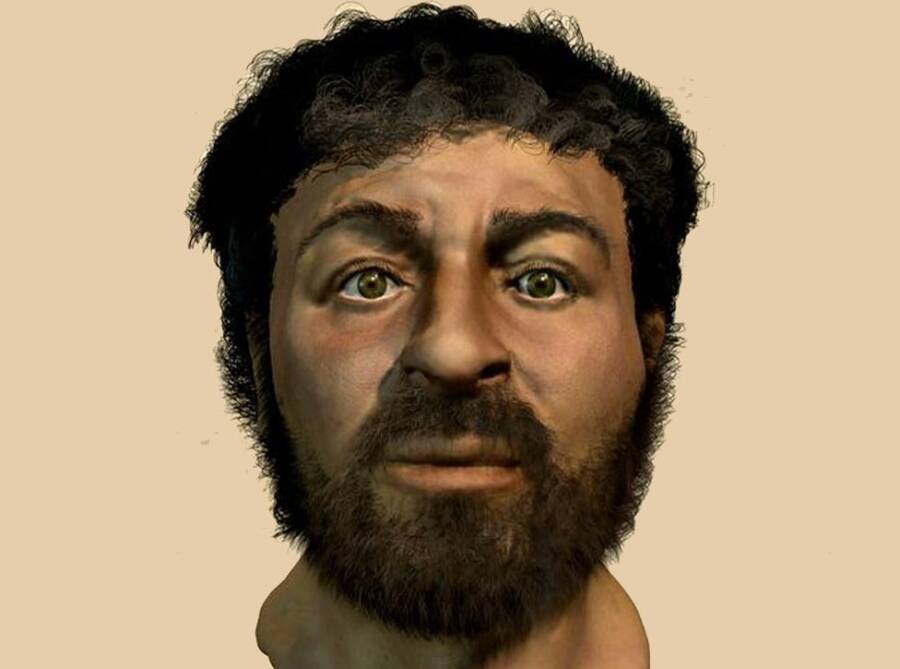
Bible passages like Luke 19:3-4 state that he did not stand out in a crowd and was particularly small:
“And he was seeking to see who Jesus was, but on account of the crowd he could not, because he was small in stature. So he ran on ahead and climbed up into a sycamore tree to see him, for he was about to pass that way.”
Why Do We Feel Attached to Racial Depictions of Jesus?
Psychological attachment arises from social identity theory, where groups bond over shared symbols. When these symbols include racial traits, challenging them feels like an attack on belonging. This creates emotional resistance, manifesting as defensiveness.
Cultural conditioning reinforces this through repeated exposure in media and education. For example, in marketing, a brand mascot designed with specific features becomes synonymous with consumer loyalty, making changes provoke backlash. Likewise, racialized Jesus images embed deeply in collective psyche.
Modern psychology links this to confirmation bias, where we seek evidence supporting preconceptions. Releasing attachment requires awareness of these mechanisms. It prevents spirituality from being hijacked by identity politics.
The Colonial Distortion: A Spiritual Bypass
European artists used the “White Jesus” to justify imperialist hierarchies for centuries. By making the central figure of a movement look like the ruling class, they effectively coded divinity as Whiteness. This creates a subconscious “spiritual bypass” where seekers ignore the actual, gritty Middle Eastern roots of the practice in favor of a sanitized, comfortable version.
For Example: This mirrors the way corporate branding takes a grassroots movement and polishes it until the original, “messy” founders are no longer recognizable in the marketing.
Shadow vs. Light Table
| Feature | The Superficial (Projection) Solution | The Mindfully Pure (Deep) Solution |
| Visual Focus | Swapping one racial extreme for another. | Accepting historical Levantine ambiguity. |
| Spiritual Goal | Seeking a “God who looks like me” for comfort. | Seeking the Universal Truth within a specific cultural context. |
| Mental State | Identity Attachment and tribalism. | Cognitive Flexibility and historical curiosity. |
| Result | Reinforced ego-identity. | Deconstruction of the ego’s need for a mirror. |
How Can We Challenge These Racial Projections?
Start with education on historical context, reviewing archaeology of first-century Judea, and what we know about Levantine populations under Rome or Roman artifacts depicting Judeans. This builds a factual foundation, countering biased art. Question depictions by tracing their origins, such as Renaissance European influences.
Incorporate mindfulness practices to observe reactions without judgment. For example, in therapy sessions, clients diagram family trees to uncover inherited biases, revealing how assumptions form. Apply this to spiritual figures by journaling responses to diverse Jesus images.
Use cognitive restructuring from CBT to reframe projections as tools, not truths. Identify triggers and replace them with evidence-based views. This process fosters detachment, prioritizing inner experience.
What Practical Steps Help Integrate This View?
Engage in comparative studies of global religious art, noting variations in Jesus’s portrayal. This exercise highlights universality, reducing fixation on one image. Track personal insights in a dedicated notebook.
Practice visualization techniques grounded in psychology, imagining Jesus without racial features. For example, in team-building exercises, participants describe colleagues by skills rather than appearance, shifting focus to essence. Adapt this to meditation, emphasizing teachings over form.
Build community discussions with fellow SBNR seekers, sharing logical analyses. Set ground rules for evidence-based dialogue. This reinforces the shift through social support.
What to Do Instead: A Simple Integration Framework
1. Name the Reflex
When a specific image of Jesus triggers defensiveness, discomfort, or urgency to argue, label it as a protective reflex, not a truth claim. This simple naming interrupts automatic identity bracing before it escalates into belief defense.
2. Separate Symbol from Authority
Remind yourself that an image is a carrier, not the source, of meaning. Authority comes from the teachings and their psychological impact, not from the skin tone, facial structure, or artistic lineage of the symbol representing them.
3. Re-anchor in Teachings
Return attention to what is operational: ethical action, perceptual clarity, and reduced suffering. When form dissolves, function becomes visible—and the teachings regain relevance without needing visual allegiance.
What Happens When We Embrace This Perspective?
Inner freedom emerges as racial barriers dissolve, allowing direct engagement with wisdom traditions. This reduces cognitive load from defending identities. Spirituality becomes more inclusive, drawing from diverse sources.
Psychological resilience increases, with lower susceptibility to manipulation via symbols. For example, in political campaigns, voters who question iconic representations make decisions based on policies, not imagery. Similarly, this view empowers autonomous spiritual growth.
Long-term, it cultivates empathy across cultures, bridging divides. Personal experiences gain primacy over dogma. The result is a grounded, adaptable practice.
Where Do We Go From Here in Our Journey?
Explore interdisciplinary resources, like psychology texts on archetype theory by Jung. Apply insights to other figures, testing the framework. Commit to ongoing reflection through weekly reviews.
Integrate into daily routines, such as ethical decision-making inspired by teachings. For example, in project management, leaders prioritize core values over superficial metrics, ensuring alignment. Use this to evolve your spiritual path.
Seek mentorship or online forums for deeper dives. Measure progress by reduced emotional reactivity. This sustains momentum toward authentic spirituality.
The Skeptic’s FAQ
- Does his skin color actually change the “meaning” of his teachings? No, but the denial of his skin color reveals our own unconscious biases and power structures that we must address to reach true spiritual maturity.
- If he wasn’t “White,” why does the Shroud of Turin look the way it does? The Shroud is a highly debated artifact, but even if authentic, its visual interpretation is often filtered through medieval artistic expectations rather than modern forensic science.
- Isn’t “Social Justice” just infiltrating spirituality here? This isn’t about modern politics; it’s about intellectual honesty. Using the correct historical phenotype is a matter of EEA (Evidence-Based Accuracy), not an “agenda.”
